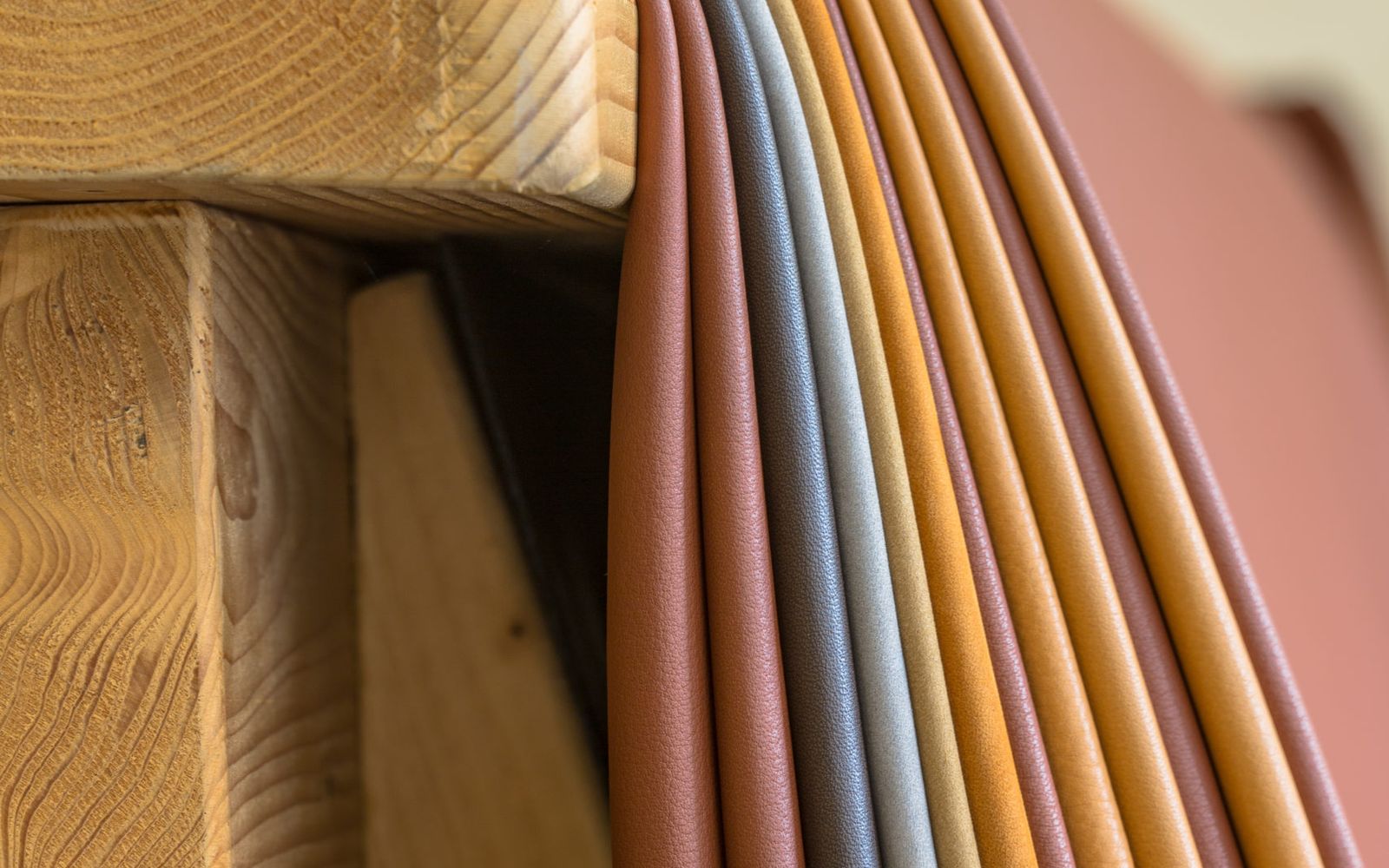
Choosing the right covering for your upholstery project
Choosing a covering is not just about colour or price per metre. Upholstery needs to withstand a specific use, fit into an existing setting and remain pleasant over time. Leather, faux leather and vinyl therefore cannot be recommended in exactly the same way.
Leather, faux leather and vinyl: understanding the differences
Leather is a natural material. Its hand, depth of colour and ability to develop a patina make it a sought-after choice for automotive interiors, high-end motorcycles and furniture. It does, however, require suitable care and a finish that matches the way it will be used.
Faux leather and some vinyls are technical coverings designed to offer consistent appearance, easy maintenance and a wide choice of colours. They can be particularly relevant in environments exposed to moisture, splashes or intensive use. Quality varies considerably depending on the backing, grain, flexibility and resistance of the product.
Choose for the use, not only for the appearance
- In a car, repeated rubbing, cabin temperatures and visual continuity with the preserved elements all need to be considered.
- On a motorcycle seat, the material must follow movement, remain comfortable and withstand the specific pressure of the rider and passenger positions.
- In marine upholstery, resistance to moisture, UV exposure and regular cleaning is central.
- For an armchair or sofa, flexibility, seating comfort, seam stability and consistency with the furniture style are decisive.
What the workshop looks at before recommending a material
Before recommending a material, the upholsterer looks at the element to be restored, its structure, the foam, the seams and the areas that are actually used. The parts that will remain in place also matter: new leather needs to work with an existing colour, grain and level of sheen.
The right choice is often a balance between appearance, comfort, care, budget and lifespan. A more technical material is not necessarily a compromise; it may be the most appropriate answer for a particular use.
Good advice starts with the existing element
For precise advice, send photos of your project to Sellerie du Parc. From Paris and the surrounding area, items can be dropped off at the Vernouillet workshop by appointment; in exceptional cases, collection or a carrier can be considered.