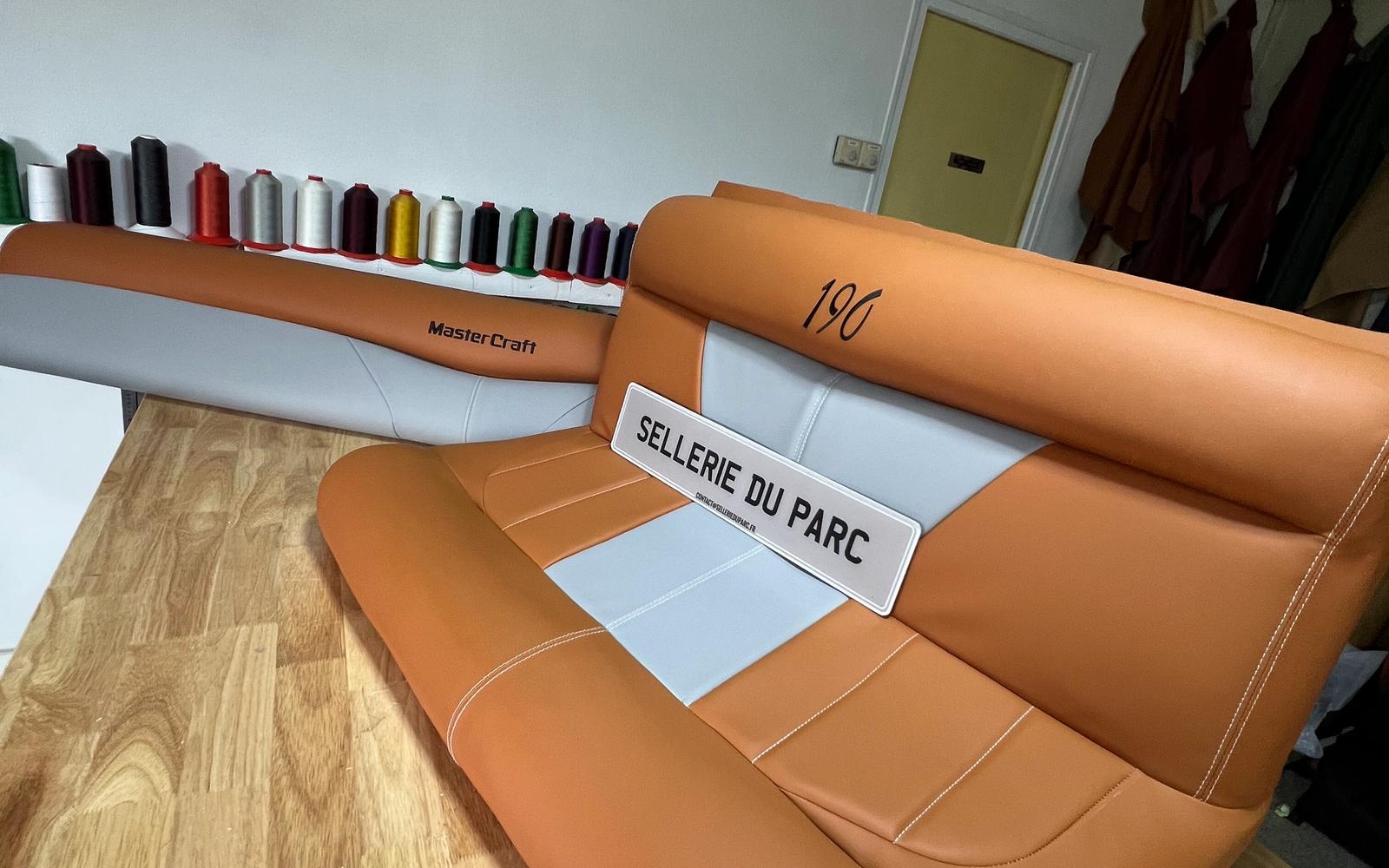
The key points in a marine upholstery restoration
On board, upholstery must remain comfortable while withstanding a demanding environment. Moisture, spray, salt, UV exposure and repeated cleaning accelerate the ageing of coverings and seams. Restoring a boat bench therefore means addressing the causes of wear as well as its appearance.
Identify the constraints of each location
A seat exposed on deck does not age in the same way as a protected cabin seat. Walkways, corners and areas where water collects deserve particular attention. Before suggesting a solution, the upholsterer looks at the shape, possible ventilation, foam condition and the way the elements are fixed.
Choose a covering suited to marine use
- An easy-clean surface limits marks from everyday use.
- A material designed to resist UV exposure helps preserve the colour for longer.
- Good flexibility follows curved shapes and avoids excessive tension.
- Threads and finishes suited to the marine environment improve seam durability.
Restore seats and benches without losing comfort
The covering is only part of the work. Compressed, damp or deformed foam can make a seat uncomfortable even with new material. Depending on the assessment, the work may therefore include new foam, a panel replacement or the complete reworking of a cover.
Plan the logistics of the elements to be restored
Elements can be dropped off at the workshop by appointment. When the boat is far away, the parts can be sent by carrier; in exceptional cases, collection can also be considered. The simplest starting point is to send photos, dimensions and a few details about the boat's exposure.
To prepare your marine upholstery request, describe the elements involved, their condition and how they are used. The workshop can then guide you towards a partial or complete restoration.